Engineering Adhesion: A Technical Guide on How to Avoid Tiles Lifting Risks
How to avoid tiles lifting risks the phenomenon of tile lifting—often colloquially termed “tenting”—is rarely the result of a single isolated oversight. It is the architectural manifestation of accumulated stress within a rigid assembly, where the tile, mortar, and substrate interact across differing coefficients of thermal expansion and structural movement.
Achieving a durable installation requires a transition from the mindset of “gluing a surface” to “engineering an assembly.” This shift acknowledges that every floor system exists in a state of dynamic tension, reacting to shifts in the structure’s foundation, humidity fluctuations, and cyclic thermal loading.
It examines the mechanical, chemical, and systemic variables that contribute to catastrophic bond failure. By dissecting the root causes of movement-induced detachment, one gains the ability to anticipate failure points and mitigate them through disciplined structural design and material selection.
Table of Contents
Understanding “how to avoid tiles lifting risks”
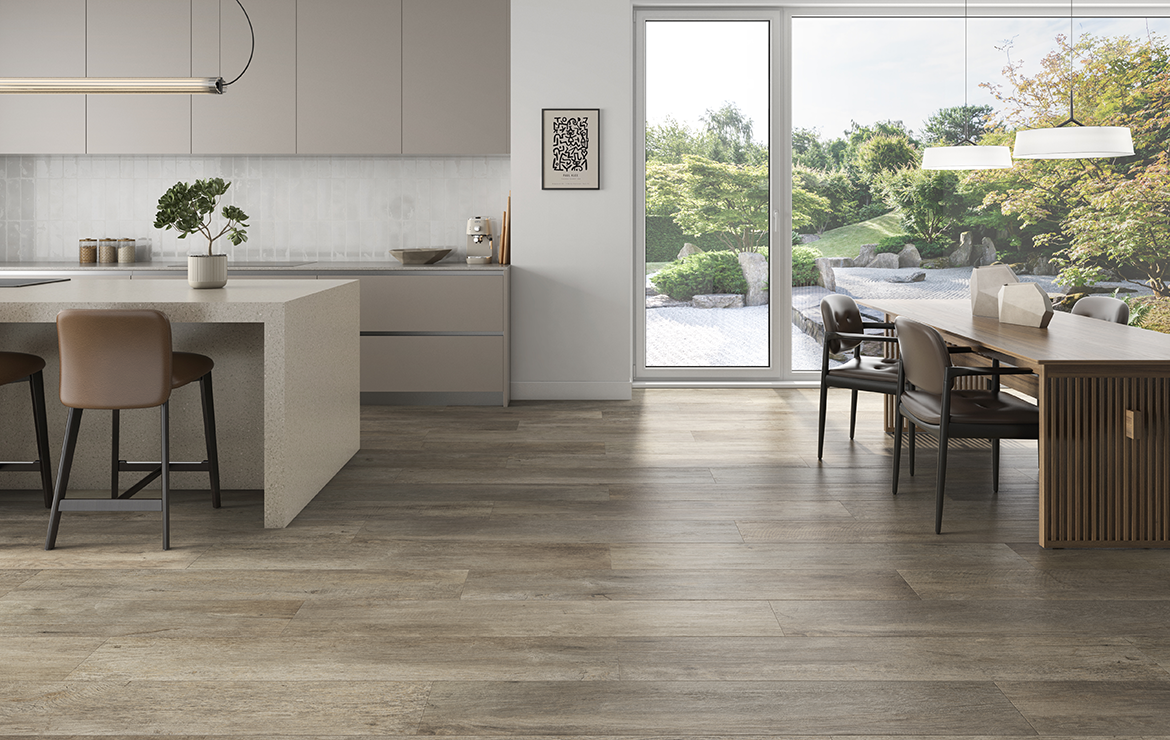
To truly grasp how to avoid tiles lifting risks, one must first discard the notion that the setting bed is a static foundation. It is an active participant in the building’s movement. The most common misunderstanding—and a primary driver of failure—is the belief that full-coverage adhesive application alone will prevent lifting. While coverage is essential, it is secondary to the management of structural movement. When a building settles or a slab expands due to temperature increases, the tile field must be able to move independently of the substrate.
Oversimplification poses a significant danger in this domain. Many assume that large-format tiles require only a standard notched trowel application, failing to account for the increased stress these large, rigid units place on the mortar. Learning how to avoid tiles lifting risks requires a focus on the “uncoupling” concept: the intentional creation of a buffer between the substrate and the floor finish. This buffer absorbs the shear stress, allowing the substrate to move without telegraphing that movement into the tile field. Without this separation, even the most expensive, polymer-modified mortars will eventually succumb to fatigue and delamination.
Deep Contextual Background
How to avoid tiles lifting risks historically, tile installation relied on mud-bed (thick-set) methods, where a sand-cement mixture provided a massive, stable, and somewhat forgiving base. As the industry moved toward thin-set applications, the demand for speed and lower labor costs grew. However, the move to thin-set systems reduced the mass of the installation and increased the sensitivity of the tile field to the underlying substrate.
The rise of large-format porcelain, which possesses extreme rigidity and low porosity, further complicated the landscape. Unlike natural stone, which can absorb small amounts of moisture and breathe, modern porcelain is glass-like. If the substrate beneath it shifts even slightly, the porcelain has no capacity to deform, leading to immediate bond failure. This evolution from massive, forgiving beds to rigid, thin, and brittle systems is the primary historical context for why tile lifting has become a more prevalent issue in contemporary construction.
Conceptual Frameworks and Mental Models How To Avoid Tiles Lifting Risks
-
The Shear-Stress Accumulation Model: Treat the floor as a series of rigid plates connected by a thin, flexible adhesive. The larger the plate (tile) and the larger the total surface area, the greater the total cumulative movement that the perimeter expansion joints must accommodate.
-
The Bonding Capacity Threshold: The bond line is a composite material. Its performance is the sum of its parts: the concrete’s tensile strength, the primer’s adhesion, the mortar’s shear strength, and the tile’s back-texture. If any of these links are weak, the system fails.
-
The Hydrostatic-Movement Nexus: Moisture is rarely just a chemical concern; it is a structural one. Moisture trapped between the tile and the slab creates hydraulic pressure as it warms, exacerbating the stresses already present from thermal expansion.
Key Categories and Technical Variations
When considering how to avoid tiles lifting risks, one must evaluate the assembly components based on their compatibility and ability to handle movement.
The decision logic here requires an audit of the site. If the project involves a concrete slab-on-grade, moisture and slab movement are the primary threats. If it involves a wood-framed subfloor, deflection and vibration are the primary concerns.
Real-World Scenarios and Decision Logic How To Avoid Tiles Lifting Risks
Consider a large, sun-drenched conservatory with high-end porcelain tiles. The solar gain creates extreme temperature gradients, leading to rapid expansion. The decision logic for how to avoid tiles lifting risks in this space mandates not only an uncoupling membrane but also a perimeter gap filled with flexible sealant rather than grout. Grouting the perimeter creates a bridge that anchors the tile to the wall, effectively locking the floor into a stress-trap.
In a commercial hallway with high foot traffic, the risk is not just thermal but mechanical fatigue. Here, the choice of a high-performance, polymer-modified thin-set with a high shear-strength rating is non-negotiable. Using a standard, entry-level mortar in this environment, even with an uncoupling membrane, would be an error, as the mortar may lack the elasticity to handle the cyclic vibrational loading of thousands of footsteps.
Planning, Cost, and Resource Dynamics
The economic impact of tile lifting is often back-loaded. While an uncoupling membrane or specialized mortar adds to the upfront material cost, it is a fraction of the expense required for a full floor removal and re-installation.
Investment in professional-grade preparation—such as diamond grinding to open the concrete pores—is the most reliable, budget-friendly way to ensure the long-term integrity of the bond.
Tools, Strategies, and Support Systems How To Avoid Tiles Lifting Risks
-
Moisture Meters: Non-negotiable for determining the readiness of a concrete slab for tile installation.
-
Notched Trowel Calibration: Proper trowel sizing is the difference between 80% and 95% mortar coverage.
-
Back-Buttering: An essential technique for ensuring a complete interface between the tile and the mortar bed.
-
Expansion Joint Profiles: Prefabricated aluminum or PVC profiles that provide a structured, durable movement joint.
-
Substrate Primers: Critical for neutralizing slab porosity and ensuring chemical compatibility.
-
Tapping Blocks/Leveling Systems: Tools that ensure a void-free, uniform bond by maintaining pressure during the setting phase.
Risk Landscape and Failure Modes
The failure taxonomy of lifting is almost always related to the “bottlenecking” of stress. If the expansion joints are placed too far apart, or if they are filled with grout instead of sealant, the stress is redirected into the tile units. Furthermore, the compounding effect of an uneven substrate—where the tile is “bridged” over a low spot—creates hollow voids that serve as focal points for mechanical failure under pressure.
Governance, Maintenance, and Long-Term Adaptation How To Avoid Tiles Lifting Risks
Governance of an installation is an ongoing process. Annual reviews of the perimeter seals are vital. Sealants are sacrificial; they will dry out, shrink, and lose elasticity over time. When they do, they must be replaced. A layered checklist—inspecting for hollow sounds (a sign of delamination), checking perimeter gap integrity, and verifying moisture control—is the foundation of long-term asset management.
Measurement, Tracking, and Evaluation
-
Leading Indicators: Pull-off bond strength testing (pre-installation) and coverage verification (lift-off testing during installation).
-
Lagging Indicators: Acoustic “drumming” sounds underfoot or visible hairline cracks at corners.
-
Documentation: Maintain a record of the specific mortar and membrane batch numbers, as well as the documented moisture content of the substrate at the time of the pour.
Common Misconceptions and Oversimplifications How To Avoid Tiles Lifting Risks
-
“Coverage is the only metric”: High coverage means nothing if the membrane is missing or the perimeter is bridged.
-
“Grout stops the movement”: Grout is rigid and will crack; it provides no structural expansion.
-
“All thin-set is the same”: The chemical makeup of a polymer-modified mortar is specifically engineered for flexibility and bond strength.
-
“Tile is waterproof”: Tiles are essentially glass; they do not breathe, and they trap all moisture beneath them.
-
“I don’t need a movement joint in a small room”: Every change in plane or material boundary is a potential site for movement.
-
“I can just patch the lifting tile”: Once a bond fails, the entire field is compromised; patching is merely a temporary delay.
Ethical and Contextual Considerations
The ethical dimension of this work is found in the stewardship of the build. Providing a surface that will fail within three years due to the omission of a $100 expansion joint is a violation of professional trust. One must consider the environmental lifecycle as well; the energy-intensive production of porcelain and the carbon footprint of structural repairs mandate that the original installation be executed with the intent of permanent, multi-decade durability.
Synthesis and Strategic Judgment How To Avoid Tiles Lifting Risks
The objective regarding how to avoid tiles lifting risks is fundamentally about creating a system that acknowledges its own vulnerability. By isolating the tile from the substrate, respecting the necessity of perimeter movement, and utilizing materials tailored to the specific thermal and mechanical stresses of the environment, one builds a floor that is resilient. Technical mastery is not about building a rigid, unmoving monolith; it is about building a system that can move, shift, and adapt without failing. The judgment required to succeed in this field is the ability to see the floor not as a decorative finish, but as a dynamic structural assembly.