The Technical Guide to Luxury Pacific Northwest Cedar Deck Sealing USA
Luxury pacific northwest cedar deck sealing usa the Pacific Northwest (PNW) presents perhaps the most challenging microclimate for exterior wood preservation in the United States. With average annual rainfall often exceeding 40 inches and prolonged periods of high relative humidity, Western Red Cedar—the hallmark material for high-end regional decking—exists in a perpetual state of moisture exchange. When homeowners invest in premium cedar architecture, the assumption of longevity often clashes with the reality of biological degradation, fungal colonization, and UV-induced oxidation. Preservation is not merely a task of applying a liquid barrier; it is an exercise in managing the complex equilibrium between cellular breathability and water exclusion.
The marketplace is flooded with generic advice that reduces deck care to a weekend chore, frequently ignoring the specific cellular biology of softwoods and the volatile weather patterns unique to the Cascadia corridor. When approached without a rigorous understanding of substrate preparation, resin compatibility, and atmospheric science, even the most expensive treatments yield premature failure. Achieving a finish that preserves the structural integrity and aesthetic clarity of cedar requires a departure from standard DIY methodologies. It demands a systematic, analytical approach to moisture management that treats the wood as a living, reacting material rather than a static substrate.
This article examines the technical requirements for maintaining high-value exterior wood assets in a temperate rainforest environment. By moving beyond product branding to focus on molecular interaction, penetration kinetics, and failure mitigation, we provide a definitive framework for long-term stewardship. Successful maintenance in this region hinges on the ability to differentiate between transient topical coatings and integrated preservative systems, ensuring that the luxury pacific northwest cedar deck sealing usa remains an asset for decades rather than a recurrent maintenance liability.
Table of Contents
Deep Contextual Background: The Evolution of PNW Wood Stewardship
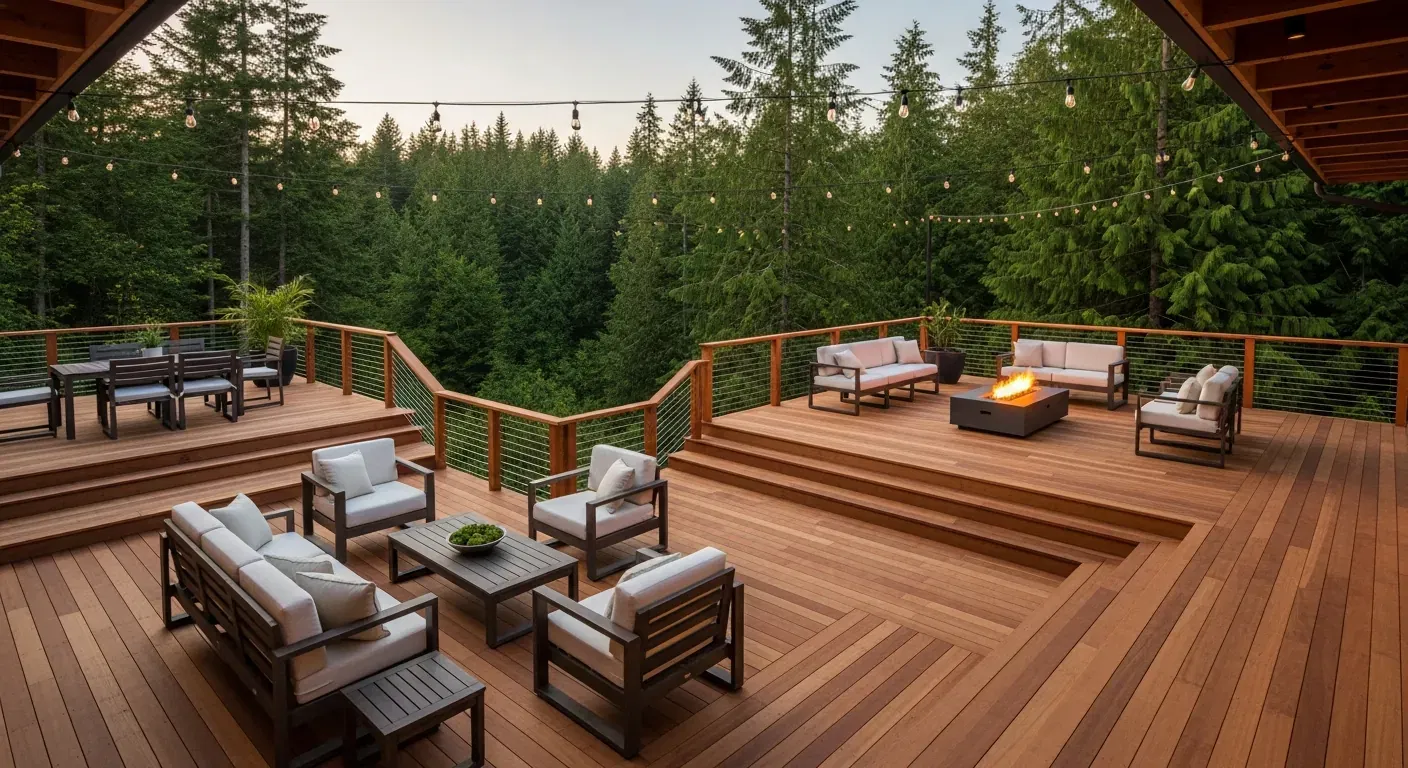
Luxury pacific northwest cedar deck sealing usa the historical reliance on linseed and tung oils provided a rudimentary level of protection but failed to inhibit fungal growth in the damp conditions characteristic of Washington, Oregon, and British Columbia. Early 20th-century preservation methods were limited by the lack of synthetic fungicides and UV stabilizers. As environmental regulations regarding volatile organic compounds (VOCs) tightened, the industry was forced to re-engineer formulas. The current state of the art in the PNW involves low-VOC, high-solids penetrating systems that leverage synthetic paraffin or modified alkyds, offering superior hydrophobicity without the ecological costs of older, solvent-heavy formulations.
Conceptual Frameworks: The Science of Cellular Preservation
-
The Moisture Equilibrium Model: Wood is hygroscopic. Sealing is not about blocking moisture entirely, but about slowing the rate of moisture exchange so the wood can maintain a stable internal content, preventing checking and warping.
-
UV-Degradation Theory: Lignin in the surface cells is destroyed by UV radiation, turning the cedar grey. A proper treatment must act as a sacrificial barrier or a molecular filter for UV, preserving the structural lignins below.
-
The Capillary Action Constraint: The effectiveness of a sealer is limited by its molecular weight. If a product is too thick, it sits on the surface. If it is too thin, it evaporates without leaving enough solids to fill the cellular cavities.
Key Categories: Comparing Treatment Chemistries
Selecting the luxury pacific northwest cedar deck sealing usa approach requires balancing the ease of reapplication with the need for deep, long-term cellular fortification.
Real-World Scenarios and Decision Logic Luxury Pacific Northwest Cedar Deck Sealing Usa
-
The Coastal Exposure Scenario: High salt content and wind-driven rain demand a sealer with added biocides. The decision point here is between a purely aesthetic oil and a functional preservative-enhanced system.
-
The Shaded Forest Floor Scenario: Lower UV exposure but extreme fungal pressure. The focus must be on antifungal agents rather than heavy UV-blocking pigments.
-
The Full Sun South-Facing Deck: High UV intensity requires a semi-transparent or pigmented sealer. Clear sealers will fail within six months in these conditions due to rapid lignin oxidation.
Planning, Cost, and Resource Dynamics
Effective luxury pacific northwest cedar deck sealing usa projects often carry higher upfront costs due to the labor-intensive nature of chemical-free wood preparation, such as soft-washing or gentle sanding to open the pores without damaging the fibers.
Tools, Strategies, and Support Systems
-
Moisture Meters: Measuring the wood’s moisture content below 15% is the single most important diagnostic step before application.
-
Low-Pressure Spray Systems: Ensure consistent coverage without forcing product into areas where it might pool.
-
Natural Fiber Brushes: Necessary for back-brushing to ensure the sealer is driven into the grain, maximizing penetration.
Risk Landscape: A Taxonomy of Failure Luxury Pacific Northwest Cedar Deck Sealing Usa
Failure often manifests as “blotching” or “peeling.” Blotching results from uneven absorption (common in old growth vs. second-growth cedar). Peeling occurs when the moisture vapor pressure exceeds the adhesion force of the coating—a common outcome of applying a sealer to wood that is too damp or when using an incompatible film-forming product.
Governance, Maintenance, and Long-Term Adaptation
A successful protocol involves a biennial inspection. During the second year, a homeowner should perform a “bead test” to check for water repulsion. If the wood absorbs water, a light cleaning followed by a single-coat refresh is necessary. This “light-touch” approach preserves the luxury pacific northwest cedar deck sealing usa investment and prevents the buildup of layers that can lead to flaking.
Measurement, Tracking, and Evaluation Luxury Pacific Northwest Cedar Deck Sealing Usa
-
Quantitative Signal: Measured moisture content over time.
-
Qualitative Signal: Color retention and surface “slickness” after rain.
-
Documentation: A maintenance ledger documenting the date of application, material batch numbers, and environmental conditions at the time of application (temperature/humidity).
Common Misconceptions and Oversimplifications
-
Myth: “Waterproofing” wood is possible. Correction: All wood will eventually absorb water; the goal is to manage the speed and duration of that absorption.
-
Myth: More sealer is better. Correction: Excess sealer creates a gummy, tacky surface that attracts dirt and biological growth, negating its protective benefits.
Conclusion Luxury Pacific Northwest Cedar Deck Sealing Usa
The pursuit of the ideal is not about perfection, but about managed endurance. The PNW environment requires a commitment to deep-penetrating, vapor-permeable technologies applied with precision and sustained through rigorous, data-informed maintenance cycles. Cedar decking can achieve a lifespan that far exceeds standard expectations, maintaining its integrity and beauty regardless of the regional rainfall.