Resilience in the Tropics: The Engineering of Moisture Control
Best florida keys hurricane grade waterproofing united states the Florida Keys represent an environment where the threshold between habitable space and the encroaching marine climate is perpetually tested. In this low-lying, salt-saturated geography, moisture is not merely a seasonal nuisance; it is an active, kinetic force that degrades structural integrity through corrosive electrolysis, hydro-mechanical pressure, and biological decay. Achieving true long-term performance requires a departure from conventional construction methodologies, moving instead toward a system of integrated, multi-layered defense that functions as a holistic building envelope.
Effective climate-responsive design in the Keys must acknowledge the paradoxical nature of the region. Relying on isolated, surface-level sealing is a common failure point that underestimates the complexity of vapor drive and hydrostatic pressure. The objective, therefore, is to create a seamless continuity of resistance that survives the acute stress of a storm event while enduring the chronic stress of year-round humidity.
This article examines the technical requirements for developing, maintaining, and verifying the efficacy of protective envelopes in high-exposure coastal zones. It provides a structured analysis for architects, engineers, and property managers who must navigate the intersection of strict regulatory mandates and the unforgiving reality of the Florida marine environment.
Table of Contents
Understanding “best florida keys hurricane grade waterproofing united states”
In practice, this is a dangerous fallacy. There is no single product that constitutes the absolute gold standard; rather, it is a performance-based system that integrates structural geometry, material selection, and site-specific engineering.
Misunderstandings often stem from the conflation of “water-resistant” with “waterproof.” A system that performs adequately during a typical rainstorm may catastrophically fail under the sustained, multi-directional pressure of a hurricane. True mastery of best florida keys hurricane grade waterproofing united states involves designing for the weakest link—typically the junctions where disparate materials meet, such as wall-to-roof transitions, fenestration perimeters, and foundation-to-wall anchors.
Deep Contextual Background: The Evolution of Coastal Resilience
Best florida keys hurricane grade waterproofing united states historical building practices in the Florida Keys were often localized, relying on traditional masonry and passive ventilation. However, as wind-load requirements have evolved through successive iterations of the Florida Building Code, the focus has shifted toward high-impact, high-integrity envelope systems. The transition toward the 9th Edition of the Florida Building Code highlights an intensification of standards, particularly regarding wind-borne debris impact and hydrostatic resilience.
The engineering of best florida keys hurricane grade waterproofing united states has historically evolved from simple membrane application to comprehensive, envelope-wide integration. Today’s standards necessitate that builders account for not just structural load, but also the dynamic “skin” of the building—ensuring that windows, doors, and roofing assemblies act as a singular unit.
Conceptual Frameworks: Physics of the Coastal Envelope
-
The Continuity Principle: A water-control layer must be unbroken. Any penetration, whether for utilities or structural fasteners, must be treated as a potential failure point requiring dedicated flashing and secondary sealing.
-
Pressure Equalization: Rather than attempting to block all pressure, some high-performance systems utilize a “rain-screen” approach, allowing for controlled entry and drainage, which prevents the build-up of destructive hydrostatic force.
-
Redundant Load Pathing: The waterproofing system is not a decorative finish; it is a structural component. It must be able to withstand the physical distortion of the building frame during high-wind events without fracturing its seal.
Key Categories and Materials for High-Performance Envelopes
Choosing the right components for best florida keys hurricane grade waterproofing united states requires balancing structural requirements with environmental exposure.
| System Category | Typical Application | Performance Profile |
| Self-Adhering Membranes | Roof decking underlayment | Superior moisture-sealing; requires professional installation. |
| Liquid-Applied Flashings | Complex junctions/corners | Exceptional ability to adapt to irregular geometry. |
| Impact-Rated Fenestration | Openings/Windows | Vital for maintaining the pressurized interior envelope. |
| Concrete/Masonry Sealers | Structural concrete foundations | Prevents spalling caused by chloride/salt intrusion. |
When selecting materials, prioritize systems tested under the Miami-Dade or Florida Product Approval standards. These certifications ensure that the products—ranging from roof membranes to wall-sealants—have been subjected to conditions mimicking hurricane-force pressure.
Real-World Scenarios and Decision Logic Best Florida Keys Hurricane Grade Waterproofing United States
-
Scenario 1: Retrofitting an Older Masonry Home. The priority is the integrity of the shell. Decision logic dictates upgrading window/door apertures first, as these are the primary failure points for pressurized water entry, followed by a breathable, high-performance elastomeric exterior coating.
-
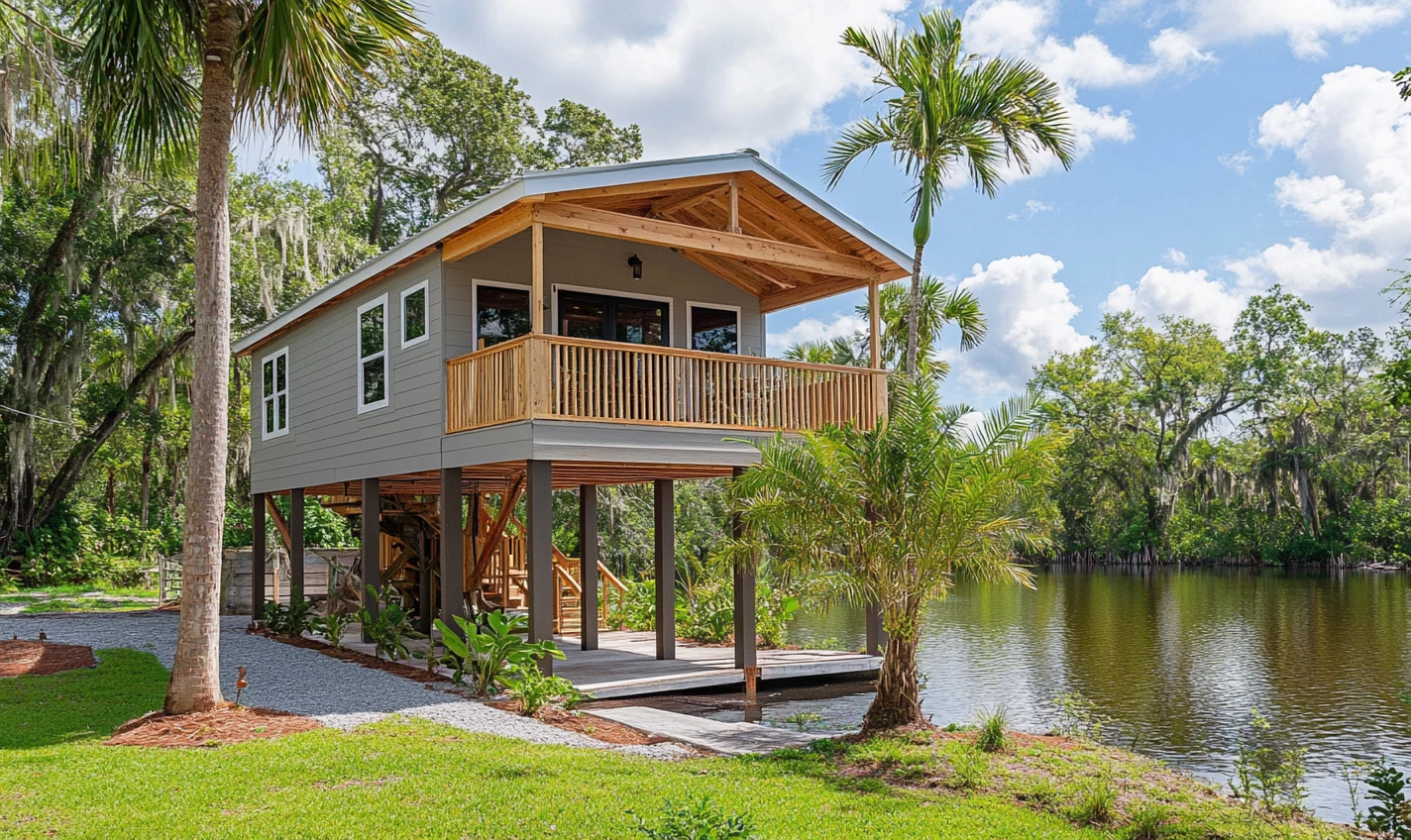
Scenario 2: New Construction in a Flood Zone. The design must utilize elevated pilings. The waterproofing strategy focuses on the “breakaway” ground-level areas—ensuring that water flow does not undermine the structural piers while protecting the elevated sub-floor from salt-spray wicking.
-
Scenario 3: Flat-Roof Maintenance. In many commercial or modern residential applications, flat roofs are prone to ponding. The use of white, reflective TPO membranes provides both UV-reflection and a robust, seamless waterproof barrier that accommodates the thermal expansion characteristic of the Florida sun.
Planning, Cost, and Resource Dynamics
Investment in best florida keys hurricane grade waterproofing united states is a preventative strategy that requires a departure from standard residential accounting.
| Expenditure Area | Typical Scope/Constraint | Variable Factors |
| Engineering/Consulting | Geotechnical and structural review | Site-specific flood zone complexity |
| High-Performance Materials | Premium membranes, flashings | Manufacturer certification requirements |
| Specialized Labor | Certified installation crews | Availability and seasonal demand |
Hidden costs often arise from “deferred maintenance” or the discovery of existing structural degradation during the application process. Budgeting for a 15–20% contingency is standard for deep-envelope projects.
Risk Landscape and Failure Modes Best Florida Keys Hurricane Grade Waterproofing United States
The failure of a coastal envelope is rarely a single event; it is often the result of “compounding risks.”
-
Corrosion-Induced Spalling: Micro-fissures in concrete foundations allow salt-air entry, causing rebar to rust, expand, and shatter the surrounding concrete.
-
Flashing Fatigue: Poorly detailed transitions around windows are the most common source of hidden long-term interior water damage.
-
UV Degradation: Even robust sealants will fail if not protected by a compatible UV-resistant finish or reflective barrier.
Governance, Maintenance, and Long-Term Adaptation
Maintenance is a lifecycle necessity, not a one-time project.
-
The Layered Checklist:
-
Annual: Inspect all window/door seals for signs of cracking or separation.
-
Biennial: Conduct a moisture audit using thermal imaging to detect hidden water traps.
-
Post-Storm: Immediate assessment of flashing and roof-to-wall transitions.
-
Measurement, Tracking, and Evaluation Best Florida Keys Hurricane Grade Waterproofing United States
Reliable performance is tracked through both qualitative and quantitative indicators.
-
Leading Indicators: Periodic moisture-content readings of wood members; electrolyte potential testing of steel connections.
-
Lagging Indicators: Evidence of efflorescence on masonry surfaces or musty odors in enclosed wall cavities.
-
Documentation: Maintain a comprehensive property “Health Dossier” containing as-built envelope drawings, material technical sheets, and certification labels for all installed systems.
Common Misconceptions and Oversimplifications
-
“Hurricane-proof is a certification.” No such rating exists. Resilience is a performance spectrum, not a binary state.
-
“One coat of sealant is enough.” Proper application requires a multi-layer system that accounts for thermal movement and substrate porosity.
-
“Codes are the ceiling of quality.” Building codes represent the legal minimum; for true resilience in the Keys, design must often exceed these baselines.
Conclusion Best Florida Keys Hurricane Grade Waterproofing United States
The search for the best florida keys hurricane grade waterproofing united states is ultimately a search for structural longevity in an environment defined by its variability. Resilience is not achieved by a single product, but through the rigorous application of engineering principles that treat the structure as an integrated organism. By prioritizing continuity, planning for material degradation, and maintaining a cycle of persistent evaluation, owners and architects can ensure that their structures remain viable long after the storm has passed.