Structural Preservation and the Economics of Balcony Maintenance
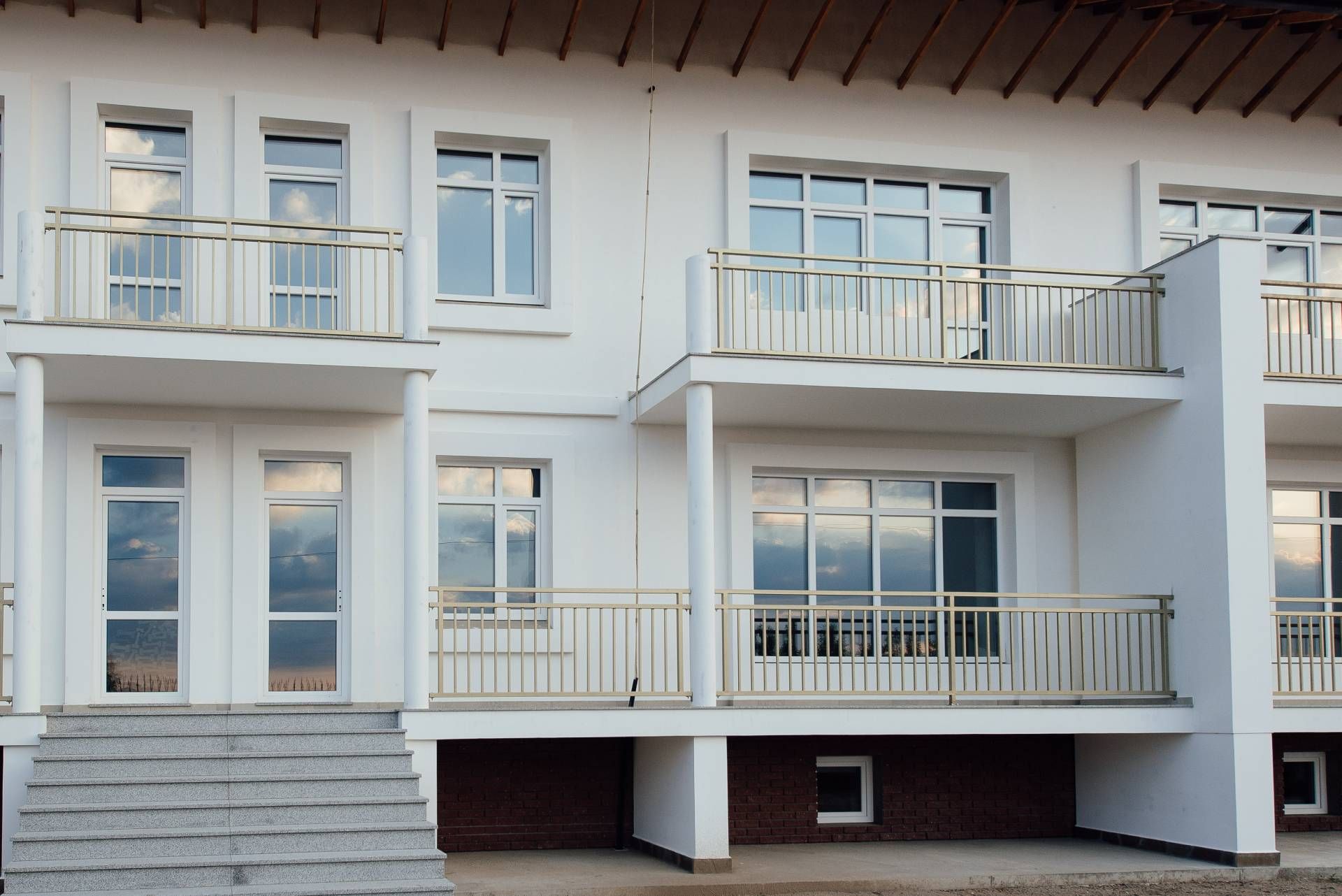
How to plan balcony crack sealing on a budget the balcony is arguably the most vulnerable component of a residential or commercial building envelope. Exposed to the full range of environmental stressors—thermal cycling, moisture saturation, freeze-thaw degradation, and gravitational loading—these platforms operate under constant structural fatigue. Instead, they act as conduits for water ingress, which accelerates the carbonation of concrete and leads to the corrosion of internal steel reinforcement, effectively compromising the structural integrity of the entire cantilevered system.
Managing these assets on a restricted budget requires a fundamental shift away from reactionary, superficial repairs toward a methodology rooted in preventative engineering. Many owners fall into the trap of applying surface-level fillers that lack the elasticity to move with the building, resulting in localized failure within a single season. True durability in restoration stems from understanding the root cause of the fracture and selecting materials that match the substrate’s coefficient of thermal expansion.
Success in this arena depends on the discipline of the assessment. Identifying whether a crack is dormant or active is the primary determinant in selecting an appropriate sealant or epoxy injection method.
Table of Contents
Understanding “how to plan balcony crack sealing on a budget”
The challenge of structural maintenance under financial constraints is a balancing act between initial expenditure and total cost of ownership. Knowing how to plan balcony crack sealing on a budget requires recognizing that the “budget” encompasses labor, equipment, and the long-term risk of remediation.
Oversimplification frequently manifests as the universal use of rigid hydraulic cement. While inexpensive, rigid fillers fail as soon as the balcony experiences natural thermal expansion or vibration. A more sophisticated approach involves a tiered classification of cracks: structural cracks (requiring tension-relief) versus aesthetic hairline cracks (requiring simple, high-elongation sealants).
Deep Contextual Background
How to plan balcony crack sealing on a budget the evolution of balcony construction from timber frames to reinforced concrete in the mid-20th century revolutionized urban design, yet it introduced new failure modes. Early concrete was often cast with limited reinforcement coverage, making it highly susceptible to chloride ion penetration. Today’s maintenance protocols are heavily influenced by the lessons learned from the late-century “condo boom,” where aggressive schedules led to poor compaction and insufficient curing. Modern remediation is now largely defined by the transition from heavy masonry repair toward the use of advanced polymer-modified cements and structural resins, which allow for thinner, more durable bond lines.
Conceptual Frameworks and Mental Models How To Plan Balcony Crack Sealing On A Budget
-
The Elasticity-Tension Model: This framework evaluates the ratio of crack movement to sealant elongation. If the crack movement exceeds the sealant’s capacity, failure is guaranteed.
Key Categories and Material Trade-offs
Realistic decision logic: If the crack is leaking and exhibits evidence of rust staining (indicating active rebar corrosion), the budget must be prioritized for epoxy injection regardless of the material cost, as the alternative—full balcony replacement—is financially prohibitive.
Real-World Scenarios and Decision Logic How To Plan Balcony Crack Sealing On A Budget
-
The “Dormant” Hairline: If a crack has not grown in three years, it is likely dormant. The strategy is to clean, prime, and seal with a high-grade polyurethane sealant. The failure mode here is a lack of surface preparation, not the material itself.
-
The “Active” Expansion Joint: If the crack opens and closes with seasonal temperature swings, standard mortars will crack again.
-
The “Active Leak” with Staining: This implies internal reinforcement degradation. The logic shifts from sealing to structural stabilization. Using a budget-friendly coating is a mistake; the solution requires chemical cleaning of the rebar and high-strength structural mortar.
Planning, Cost, and Resource Dynamics
The economic viability of these projects depends on avoiding the “double-handling” of labor. Labor represents 70-80% of the total budget.
Tools, Strategies, and Support Systems
-
Angle Grinders with Diamond Blades: Necessary for “routing” cracks to create a clean profile.
-
Backer Rods: Vital for joints that move; they prevent the “three-sided adhesion” that leads to bond failure.
-
Moisture Meters: Essential for verifying that the concrete is dry enough for the sealant to achieve a proper bond.
-
Epoxy Injection Kits: Designed for professionals, these allow for the penetration of structural cracks that surface patching cannot reach.
Risk Landscape and Failure Modes How To Plan Balcony Crack Sealing On A Budget
The taxonomy of failure is simple: material failure, bond failure, and movement failure. Bond failure occurs when the concrete substrate is dusty or contaminated. Movement failure occurs when the crack continues to grow, exceeding the sealant’s elongation limit.
Governance, Maintenance, and Long-Term Adaptation
A balcony management program should revolve around an annual inspection cycle.
-
Layered Maintenance Checklist:
-
Visual inspection for new rust staining (indicates rebar corrosion).
-
Tap test (using a hammer) to identify hollow spots (delamination).
-
Measurement of crack widths using a calibrated gauge.
-
Confirmation of functional drainage (ensure water is not pooling).
-
Measurement, Tracking, and Evaluation How To Plan Balcony Crack Sealing On A Budget
Leading indicators of a successful program include the time elapsed between application and visual failure. Documentation must include a simple site plan with marked repair locations, the type of sealant used, and the date of application. This history is the single most valuable asset for future budget planning.
Common Misconceptions and Oversimplifications
-
“Anything that fills the hole stops the leak”: False. Rigid fillers will fail immediately upon any structural movement.
-
“Painting covers the cracks”: This is the most dangerous misconception, as it hides the active deterioration of the substrate.
-
“Concrete is permanent”: Concrete is a porous, dynamic material that requires regular maintenance.
-
“Higher material cost means higher quality”: Not always. The best solution is the one that fits the mechanical profile of the crack, not the one with the highest price tag.
-
“Sealants are easy to apply”: Without proper joint preparation—cutting and cleaning—any sealant will detach within a year.
-
“One type of sealant works for all cracks”: Different cracks require different moduli of elasticity.
Ethical and Contextual Considerations How To Plan Balcony Crack Sealing On A Budget
The duty of a building steward is to ensure the safety of occupants. When budgets are tight, there is a temptation to prioritize aesthetics over structural remediation. However, the ethical and legal liability associated with a failing balcony system far outweighs the cost of professional remediation.
Synthesis and Strategic Judgment
The logic of how to plan balcony crack sealing on a budget is found in the synthesis of structural analysis and methodical execution. By correctly identifying whether a defect is superficial or structural, and by applying the appropriate material with proper substrate preparation, one ensures the structural lifespan of the asset is maximized. The goal is to move from a culture of emergency repairs to one of disciplined preservation, ensuring that every dollar spent contributes to the long-term integrity of the building.