1. The “Flagship” Authority Title (Recommended) Top UV Stable Aliphatic Waterproofing Plans: A Professional Guide to System Selection
Top UV stable aliphatic waterproofing plans the longevity of an exposed waterproofing membrane is fundamentally governed by its chemical resilience to photo-oxidation. When a membrane is subjected to continuous solar radiation, the molecular chains within the polymer matrix are susceptible to radical-induced degradation. This process, known as “chalking” or embrittlement, often precedes catastrophic water ingress. In the context of high-performance building envelopes, the shift toward aliphatic polyurethane chemistries has provided a necessary bridge between durability and aesthetic retention.
Unlike aromatic polyurethanes, which are inherently prone to yellowing and degradation under ultraviolet exposure, aliphatic systems are engineered to resist the structural breakdown caused by high-energy photons. However, selecting a high-performance system involves more than simply specifying a “UV-stable” label. It requires a nuanced understanding of substrate compatibility, film-build thickness, and the kinetics of curing in variable environmental conditions.
The following analysis examines the architectural and chemical requirements of these advanced systems. By moving past vendor-provided data sheets and into the mechanics of long-term weathering, we provide a framework for specifying and executing waterproofing strategies that prioritize structural integrity over the short-term gains of simplified application methods.
Table of Contents
Understanding “top UV stable aliphatic waterproofing plans”
To properly evaluate top UV stable aliphatic waterproofing plans, one must first decouple the marketing narrative from the material science. A frequent misunderstanding is the assumption that “aliphatic” is synonymous with “indestructible.” While the aliphatic backbone is inherently resistant to UV degradation, the overall system’s success depends heavily on the integration of secondary components, such as primers and reinforcement meshes.
Over-simplification arises when project managers treat the waterproofing membrane as an isolated film. In reality, the membrane operates within a larger assembly that includes thermal movement, vapor drive, and drainage efficiency. Attempting to identify the top UV stable aliphatic waterproofing plans without evaluating the system’s elongation properties—its ability to move with the structure during thermal cycling—is a common oversight that leads to premature cracking, regardless of the membrane’s UV resistance.
Deep Contextual Background
Top UV stable aliphatic waterproofing plans the transition from solvent-based aromatic systems to high-solids aliphatic polyurethanes mirrors the broader movement toward sustainable, low-VOC construction practices. The development of advanced aliphatic formulations allowed for the creation of coatings that maintain the flexibility of their aromatic counterparts while providing a cross-linked polymer structure that is virtually immune to photo-chemical breakdown.
This evolution is closely tied to the rise of fluid-applied membranes (FAM) in modern architecture. As balconies, podium decks, and roof terraces became increasingly integral to urban living, the need for a finish that is not only functional but also aesthetically stable became paramount. Aliphatic chemistry provided the industry with a way to ensure that waterproofing membranes could remain exposed to the elements for decades without needing an sacrificial topcoat.
Conceptual Frameworks and Mental Models Top UV Stable Aliphatic Waterproofing Plans
-
The Polymer Lattice Model: Visualize the membrane as a complex lattice of interlinked chains. UV exposure acts like a pair of shears cutting the cross-links. Aliphatic systems are engineered with bonds that are energetically “stronger” against UV energy, preventing the lattice from collapsing under solar stress.
-
The Vapor Gradient Model: Waterproofing is a barrier to liquid water, but not necessarily a barrier to gas. The effectiveness of any aliphatic plan is defined by its ability to allow water vapor to escape from the substrate while preventing liquid water ingress, particularly in high-humidity climates.
-
The Adhesion Interface Model: No membrane is better than its weakest point of attachment. The mental model should be: the waterproofing is only as stable as the bond between the primer and the substrate, not just the stability of the membrane itself.
Key Categories and Technical Variations
When comparing top UV stable aliphatic waterproofing plans, technical specifications must be categorized by the service life and traffic expectations of the area.
Selecting the top UV stable aliphatic waterproofing plans involves a hierarchy of needs: first, mechanical compatibility with the substrate (concrete vs. metal vs. wood); second, chemical cross-linking density; and third, the specific aesthetic requirements for color retention over time.
Detailed Real-World Scenarios Top UV Stable Aliphatic Waterproofing Plans
1. The High-Traffic Urban Podium
In environments where high foot traffic and thermal movement coincide, the membrane must combine UV stability with extreme abrasion resistance. The failure mode here is often physical thinning due to sand and footfall, which eventually exposes the substrate. An aliphatic plan here must prioritize the build-up of a high-solids layer to account for mechanical wear.
2. The Coastal Cantilever Balcony
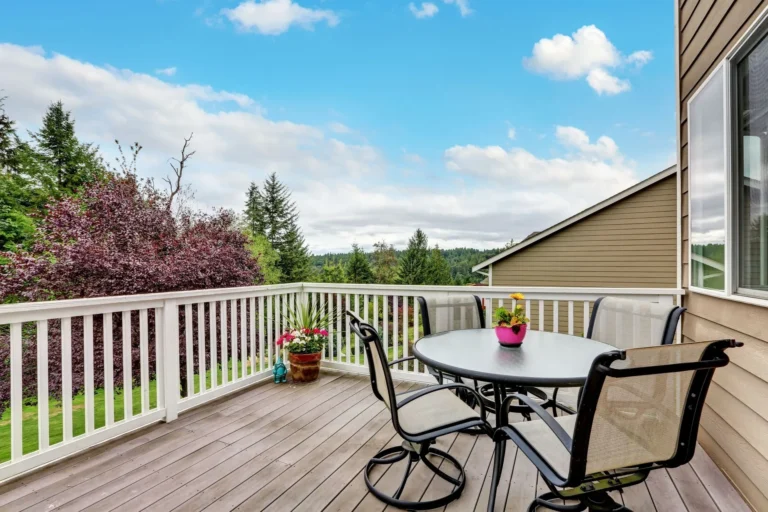
Salt air accelerates the breakdown of most coatings. An aliphatic system is essential not just for UV, but for salt-spray resistance. The failure point is typically the transition between the waterproofing and the metallic flashing. The top UV stable aliphatic waterproofing plans for this scenario include detailed edge-termination protocols that isolate the aliphatic membrane from potential galvanic corrosion.
3. The Decorative Terracotta Roof-Deck
When the waterproofing is meant to be a long-term protective layer under specialized pavers, the UV stability serves as a secondary insurance policy. The primary challenge is not UV, but drainage ponding. The aliphatic membrane must be able to withstand constant water immersion, which tests the hydrolytic stability of the polyurethane backbone.
Planning, Cost, and Resource Dynamics
The economic calculation involves comparing the initial capital expenditure against the lifecycle cost of re-coating.
A common planning error is under-allocating budget for substrate preparation. A professional-grade aliphatic waterproofing plan can be rendered useless by a concrete substrate that has not been properly profiled to a concrete surface profile (CSP) of at least 3.
Risk Landscape and Failure Modes Top UV Stable Aliphatic Waterproofing Plans
-
Pinholing: Caused by gas entrapment during the curing of a high-solids aliphatic system. This is a common failure mode in warm, humid weather.
-
Adhesion Loss: Often the result of residual form-release agents or curing compounds on the concrete that were not removed via grinding.
-
Coating “Checking”: Occurs when the membrane is applied too thinly to achieve a continuous film, leaving the substrate vulnerable to moisture ingress.
Governance, Maintenance, and Long-Term Adaptation
A comprehensive governance plan for aliphatic systems should include an “Installation Log” that tracks the environmental variables during application.
-
Monitoring: Annual visual inspection for cracking at structural joints.
-
Maintenance: A biannual “wash-down” to remove pollutants that can accelerate the degradation of even the most stable aliphatic resins.
-
Adaptation: If the structural use of the space changes—for example, adding heavy planters—the waterproofing assembly must be re-evaluated for structural load and point-pressure vulnerabilities.
Measurement, Tracking, and Evaluation Top UV Stable Aliphatic Waterproofing Plans
-
Leading Indicators: Wet film thickness (WFT) measurements during application; verification of substrate moisture levels before priming.
-
Lagging Indicators: Evidence of surface chalking, localized bubbling, or loss of adhesion.
-
Documentation: Digital records of atmospheric conditions (temperature, dew point) during application, as these are critical for assessing the long-term success of the cure cycle.
Common Misconceptions and Oversimplifications
-
Myth: “UV-stable means it will never fade.” Correction: While aliphatic chemistry resists chemical breakdown, slight aesthetic color shifting can occur over decades; the structural integrity remains, but color perfection should not be expected.
-
Myth: “I can use one primer for all surfaces.” Correction: Priming is substrate-specific. Steel, wood, and concrete require different chemical anchors for the aliphatic topcoat.
Ethical, Practical, and Contextual Considerations Top UV Stable Aliphatic Waterproofing Plans
The practical responsibility of the waterproofing strategist is the alignment of expectation and material limit. Ethical practice mandates that if a client requests a “UV-stable” system for an area with structural defects, the waterproofing must be treated as a secondary solution to the primary structural repair. To do otherwise is to provide a false sense of security that will inevitably result in failure.
Conclusion
The selection of top UV stable aliphatic waterproofing plans is a matter of integrating chemical performance with the specific physical demands of the building envelope. By prioritizing substrate preparation, meticulous film-build control, and an understanding of the polymer’s environmental limitations, one can achieve a waterproofing system that transcends the typical life cycle of standard protective coatings.