The Architectural Imperative: Sustaining Elevated Surfaces in American Climates
Best balcony waterproofing in the us balcony failures represent one of the most persistent and dangerous liabilities in the residential and commercial construction sectors across North America. Unlike ground-level slabs, balconies exist in a state of perpetual structural tension, subjected to the dual pressures of gravity loads and aggressive environmental weathering. When the horizontal seal of an elevated deck is compromised, the failure is rarely instantaneous; rather, it is a slow-motion degradation that involves the chemical breakdown of reinforcing steel and the structural rot of support joists, often hidden beneath a veneer of tile or finished decking.
Addressing this challenge requires a departure from the “sealant-and-paint” mentality. Achieving long-term performance necessitates a comprehensive understanding of the interplay between substrate movement, vapor transmission, and the mechanical properties of elastomeric polymers. Whether dealing with a luxury high-rise in Chicago or a coastal residence in Florida, the engineering requirements for a durable balcony system are dictated by the specific micro-climate and the structural design of the deck itself.
The following analysis moves beyond the conventional, often simplified advice regarding deck maintenance. It explores the systemic engineering required to ensure structural longevity, the chemical science behind modern membrane selection, and the rigorous planning required to prevent catastrophic failure. For professionals and property owners alike, the objective is to secure the building envelope against the inevitable cycle of moisture intrusion.
Table of Contents
Understanding “best balcony waterproofing in the us”
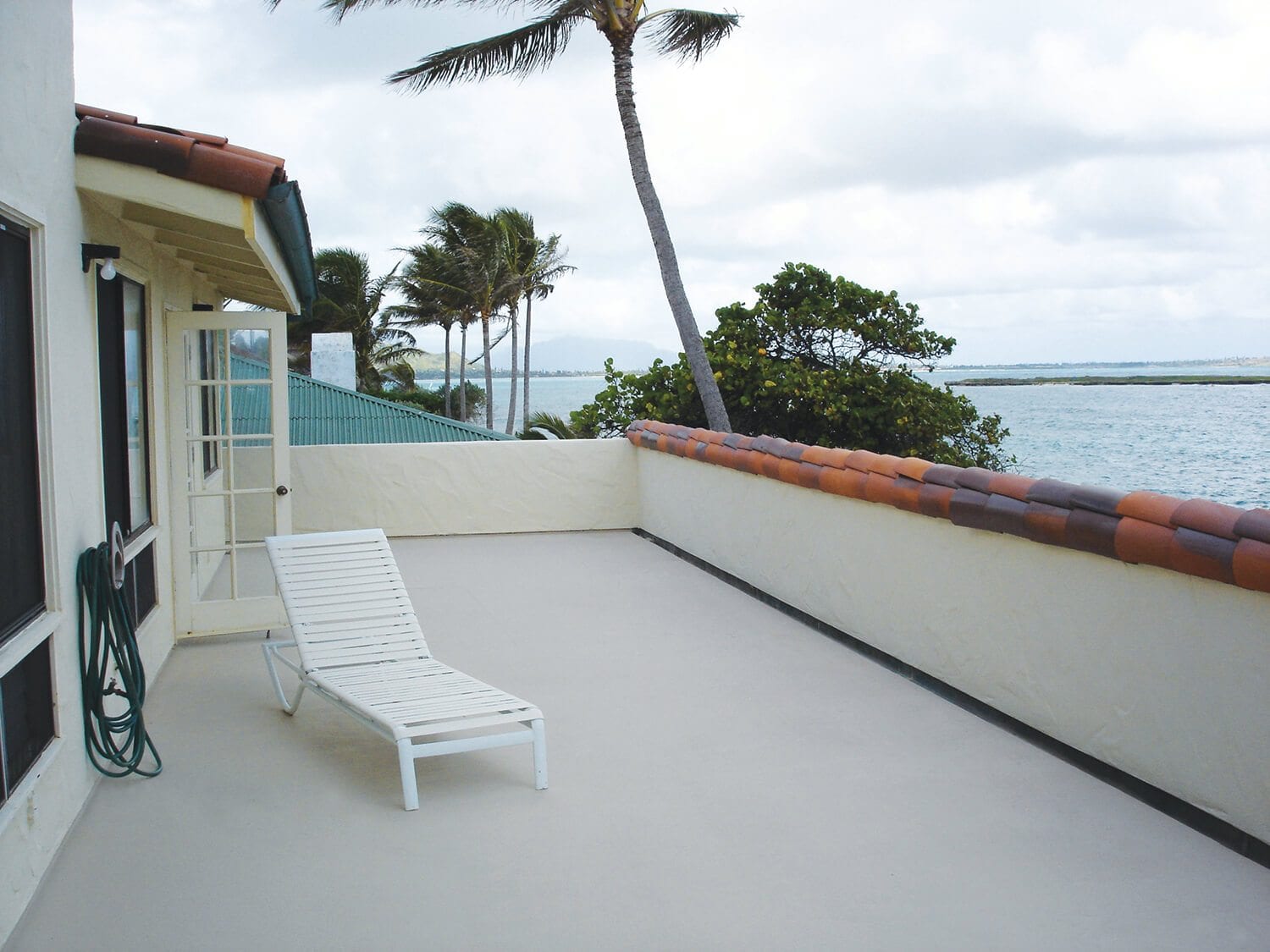
Identifying the best balcony waterproofing in the us is fundamentally a process of rigorous constraint analysis rather than a search for a singular, superior product. A common pitfall among architects and contractors is the assumption that high-cost materials equate to high-performance outcomes. In reality, a premium chemical membrane applied to an improperly prepared or excessively flexible substrate will result in failure just as surely as a low-grade sealer.
The “best” solution is context-dependent, shaped by the local code requirements (such as the California Building Code’s stringent requirements for elevated surfaces) and the specific physical demands of the structure. Many practitioners oversimplify this by focusing solely on water repulsion, ignoring the critical necessity of vapor permeability and thermal expansion. True, high-performance waterproofing systems act as a breathable, dynamic skin. They must accommodate the microscopic “breathing” of concrete and the thermal expansion of metal flashings while remaining impervious to liquid moisture ingress.
Furthermore, the variability of the North American climate introduces immense complexity. A system optimized for the constant UV exposure and salt-laden air of the Southeast will perform poorly in the heavy snow-load, freeze-thaw cycles of the Northeast. Therefore, the best balcony waterproofing in the us is defined by a systems-based approach: integrating high-tensile membranes, meticulous flashing details, and engineered drainage planes that prioritize moisture management over simple surface-level shedding.
Deep Contextual Background
Best balcony waterproofing in the us the trajectory of balcony waterproofing in the United States reflects a broader shift toward “building science” as a disciplined field. In the mid-20th century, deck protection was largely handled by primitive tar-based coatings or basic cementitious slurries. These systems were notoriously brittle; as soon as a concrete slab developed a hairline crack—a near-certainty due to thermal cycling—the waterproofing barrier was breached, leading to rapid rebar oxidation.
By the 1980s, the introduction of elastomeric polyurethanes transformed the industry. These materials offered superior elasticity, allowing the membrane to bridge cracks without tearing. However, this progress was tempered by the rise of complex architectural designs featuring thin-set tile applications, which often trapped moisture between the finish and the waterproofing layer. This mismatch in material permeability led to the “leaky condo” crises in various coastal regions, forcing a move toward more sophisticated, multi-layered drainage assemblies that emphasize the separation of the waterproofing layer from the decorative finish.
Conceptual Frameworks: Moisture Dynamics and Barrier Theory Best Balcony Waterproofing In The Us
-
The Drainage Cascade Model: This framework posits that no barrier is permanent. Therefore, the design must assume the membrane will eventually be challenged. The objective is to ensure that any moisture reaching the membrane is immediately diverted to an exterior drainage path, preventing accumulation.
-
The Substrate-Movement Equilibrium: Concrete is a dynamic material. The waterproofing system must possess an elongation factor capable of absorbing the structural shifting caused by seismic activity, live loads, and seasonal temperature shifts.
-
The Vapor Pressure Gradient: Moisture in a building moves from high to low pressure. A waterproofing system that is completely vapor-impermeable can cause moisture to become trapped inside the deck structure itself, leading to rot. The “best” designs incorporate breathable elements or vented systems where appropriate.
Technical Categories and Comparative Performance
Evaluating the best balcony waterproofing in the us requires a clear understanding of the trade-offs between various chemical and mechanical systems.
| System Type | Flexibility | UV Resistance | Maintenance | Ideal Context |
| Liquid-Applied Polyurethane | High | Low (needs topcoat) | Medium | Complex geometries, intricate flashings |
| PVC/TPO Membranes | Medium | High | Low | Large, flat residential decks |
| Cementitious Waterproofing | Low | High | Medium | Concrete-to-concrete bonds, light traffic |
| Pedestal Paver Systems | N/A | High | Low | High-traffic, luxury aesthetic decks |
| Hot-Applied Rubberized Asphalt | Very High | N/A (hidden) | Very Low | Beneath heavy paving/landscaping |
Realistic Decision Logic
When assessing these categories, ignore marketing claims regarding “lifespan.” Instead, analyze the service environment. If the balcony is a high-traffic area, a pedestal paver system (where the waterproofing layer is protected beneath) is vastly superior to a liquid-applied system that will eventually suffer from mechanical abrasion.
Real-World Scenarios: Managing Structural Variability Best Balcony Waterproofing In The Us
Coastal Condominium (High UV/Salt)
The salt content accelerates metallic corrosion, and high UV degrades polymers. The solution requires a high-solids, aliphatic topcoat that provides chemical shielding for the underlying elastomeric membrane. Failure mode often occurs at the flashing termination, where salt crystallizes and pries the seal apart.
Mountain Resort (High Snow/Freeze-Thaw)
Thermal expansion is the primary enemy here. The system must utilize a fabric-reinforced membrane at the corners and joints to manage the high stress of frozen cycles. Ignoring reinforcement at these stress points leads to “corner-cracking,” a primary failure mode in alpine construction.
Planning, Cost, and Resource Dynamics
The cost of achieving the best balcony waterproofing in the us is rarely limited to material procurement. Proper application, including the meticulous detail work at drains, walls, and railing attachments, often accounts for 60-70% of the budget.
| Project Phase | Cost Allocation | Variability Factors |
| Substrate Prep/Repair | 30% | Existing decay, moisture content |
| Flashings and Details | 25% | Complexity of railing/drain interfaces |
| Membrane Application | 35% | Material type, site conditions |
| Testing/Quality Control | 10% | Scope of flood tests, inspections |
Risk Landscape: Taxonomies of Failure Best Balcony Waterproofing In The Us
-
Systemic Failure: Caused by incorrect product selection for the specific climate (e.g., using a brittle system in a high-seismic zone).
-
Component Incompatibility: The use of sealants that do not chemically bond with the membrane, creating microscopic gaps for water wicking.
Governance, Monitoring, and Long-Term Adaptation
A truly resilient approach treats the balcony as an active asset.
-
Monitoring: Annual inspections must occur during the dry season. Look specifically for “chalking” on topcoats, which signals UV saturation, and signs of bubbling, which indicates trapped moisture vapor.
-
Review Cycles: A professional inspection of the underlying structural deck (via moisture mapping) should occur every 5 to 7 years in high-precipitation zones.
Common Misconceptions Best Balcony Waterproofing In The Us
-
“Tile is the waterproofing”: Tile is a decorative finish. The waterproofing must exist under the tile, in a dedicated layer.
-
“Sealants are permanent”: All sealants have a service life. Assuming a 10-year sealant will last 30 years is a frequent source of failure.
-
“Waterproofing is a one-time cost”: Like a roof, waterproofing systems require planned replacement intervals.
-
“DIY solutions work for balconies”: The complexity of flashing and slope management makes these systems professional-only applications.
-
“Ignoring drainage is fine”: Standing water—even for short periods—will eventually breach any membrane. Slope is mandatory.
Conclusion
The pursuit of the best balcony waterproofing in the us requires moving beyond product-centric narratives to embrace a broader architectural philosophy. By prioritizing substrate integrity, managing vapor dynamics, and accepting that all barriers eventually require intervention, building owners can mitigate the significant risks associated with elevated surfaces.